Transcript
0:00 last year we worked on writing goals with our students and so they wrote individual goals and what we noticed was happening was that the students didn't necessarily pick a goal that they could achieve or they picked the same goal each week like not go to the office or not get in trouble something that wasn't really measurable and so this year we decided to do that as a home room as part of their lesson so the first
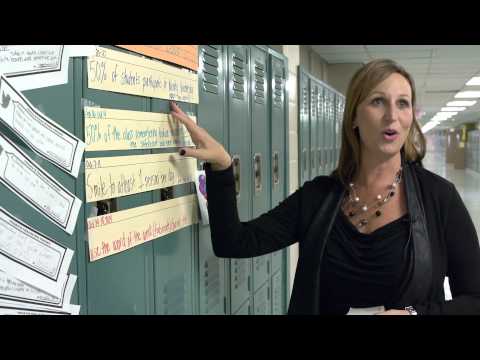
0:24 semester they still do the goals on Monday but the goals are set by the homeroom class and so you'll notice like this home room she's put up each one of her goals so the week of September 23rd their goal was that 50 percent of the students would participate in wonky Wednesday so that was a dress-up day that we had and you notice that on Friday they always look at the goal and see if they met it
0:51 or not and so this one says oops try again so I'm guessing that not 50 of them got to participate it was a crazy hair day I can understand so then so each week they evaluate how they did on it so the next week it says 50 of the class remembers to put their self in this in the safe keeper box and this one says we did it and so we've given them all they all have this little
1:12 paper that they can either put we did it and on the other side it says oops we'll try again so they can either set the same goal or they can set a new goal but with the goal for us is that they learn how to meet those goals and that it's okay to oop sometimes
Summary
- Last year, students struggled with setting measurable and achievable goals.
- This year, goals are set collectively by the homeroom class each week.
- Goals include participation in events like "Wonky Wednesday" and using a "safe keeper box."
- Students assess their success each week, learning to celebrate achievements or acknowledge setbacks.
- They have a system to indicate success ("We did it") or the need for improvement ("Oops, try again").
- The focus is on teaching students the process of goal-setting and the value of perseverance.